Failure
- Don’t rush into action
- Great ideas fail because we put the idea first instead of the problem it solves
- offer + customer = product
- If you don’t have a customer, you don’t have a product
- You can even pre-sell something that doesn’t exist (no product, or really the “product” is the promise of the product later), if you have a customer
3 questions to make a product you know will sell
- Ask “How do I make a product I know will sell?” instead of “I made a product. How do I sell it?”
- “Why do people buy?”
- how?
- what?
- buy on value
- money- “Give me 75 next week”
- pain- “Stop struggling with that task”
- buy on value
- when?
- how much?
- The 3 questions: What do they need? Want? Buy?
Case studies
Stunning
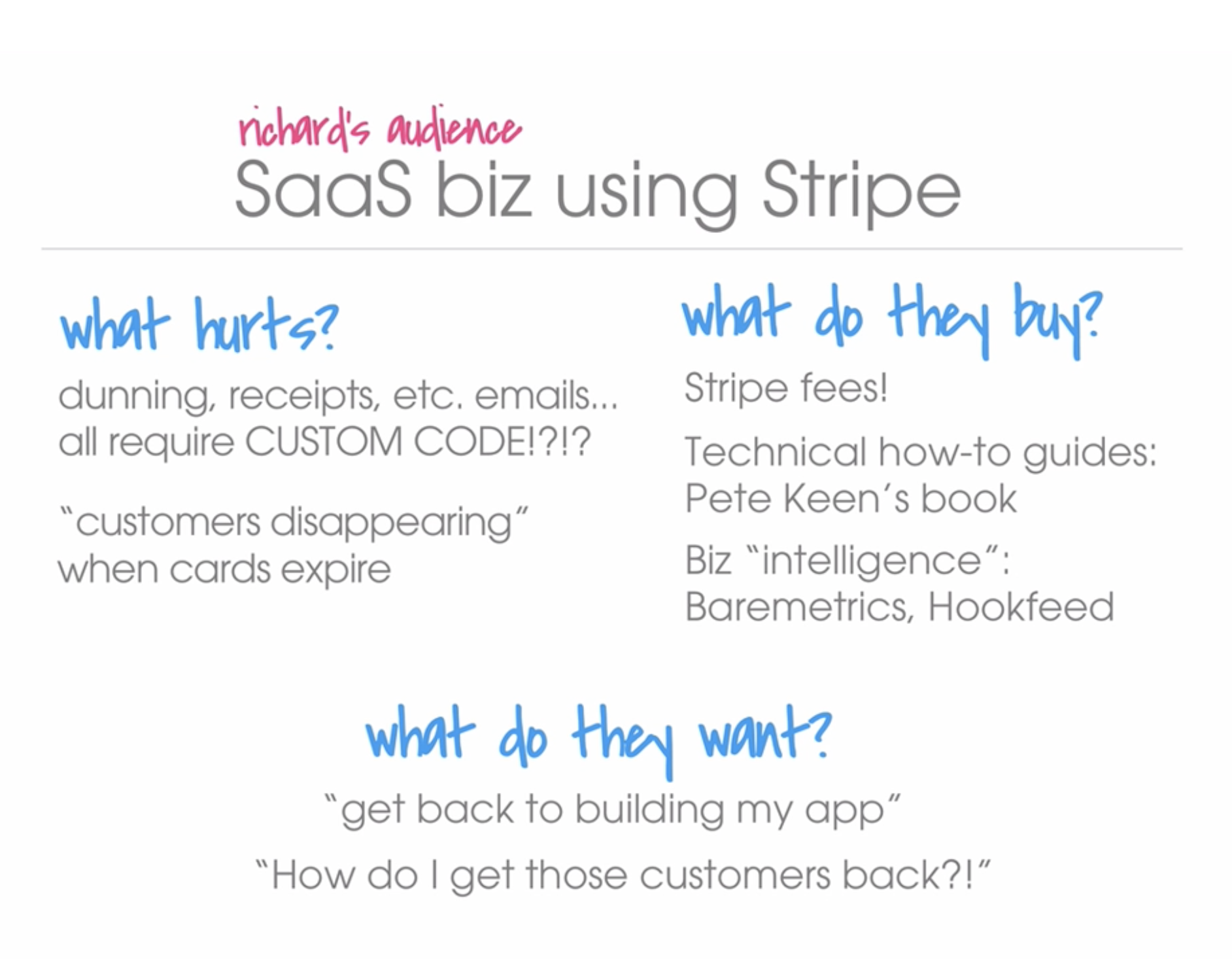 This led to Stunning: an automated dunning tool for businesses using Stripe.
Sketching with CSS
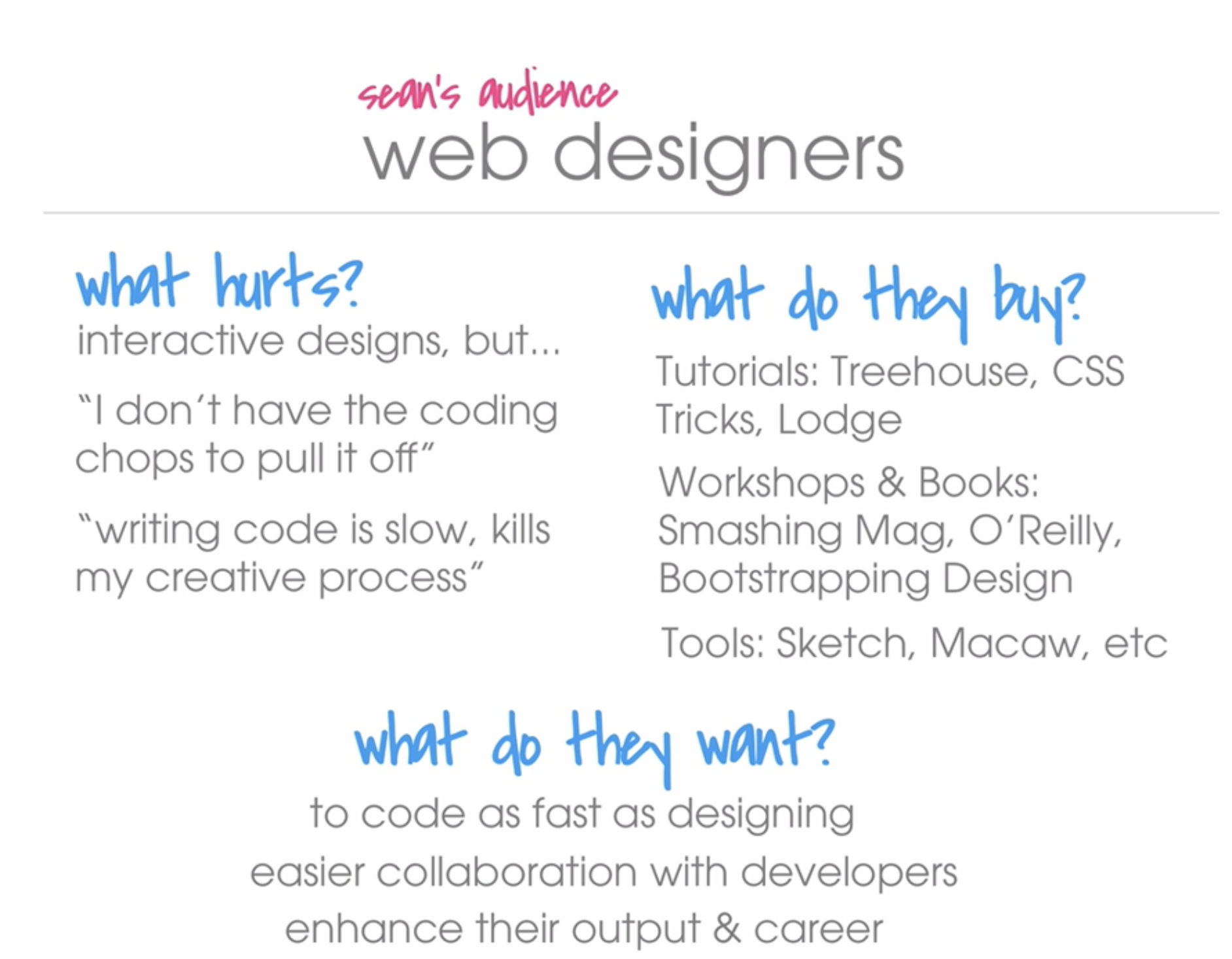 This led to an ebook that helps designers learn CSS.
Workshop
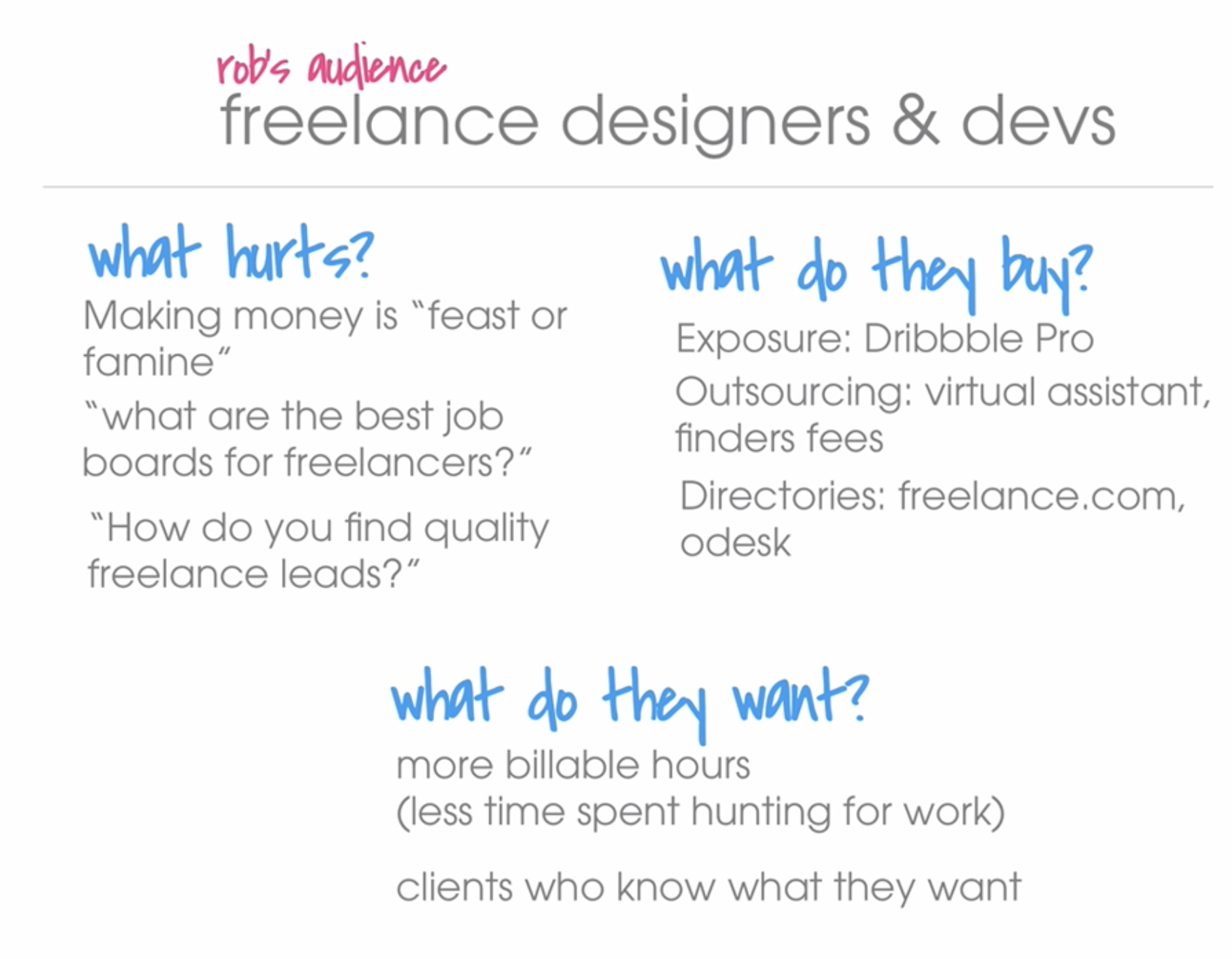 This led to a leads email service.
How to Choose Paint Colors
 This led to an ebook on choosing the right paint colors.
ScoopFree litter box
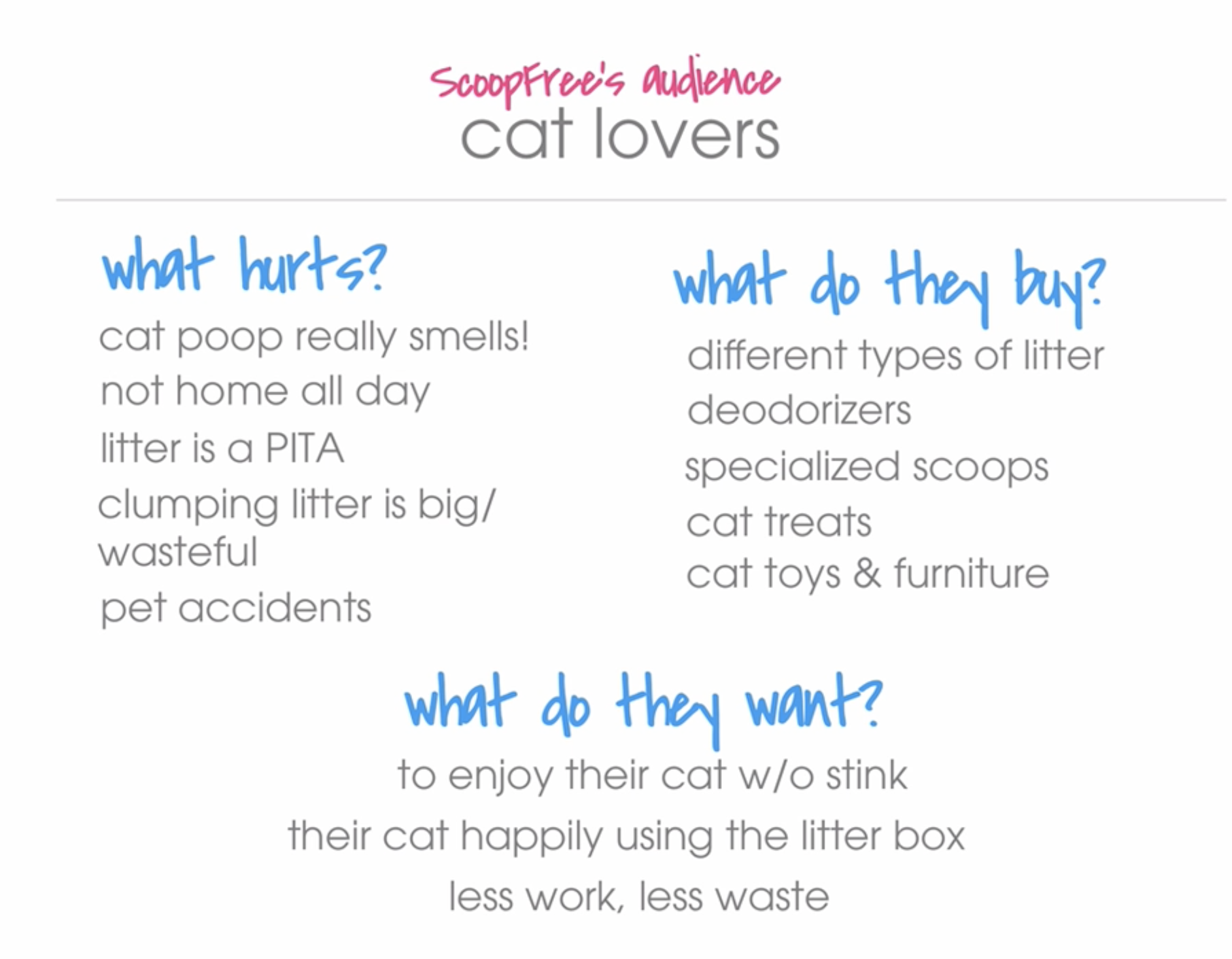 This led to a litter box that cleans itself.
How to choose an audience
- A demographic (women, Republicans) is not an audience
- Rules for choosing an audience:
- Audience must hang out online together
- They might even if you think they don’t
- Audience must buy on value
- Belong to your audience
- can serve
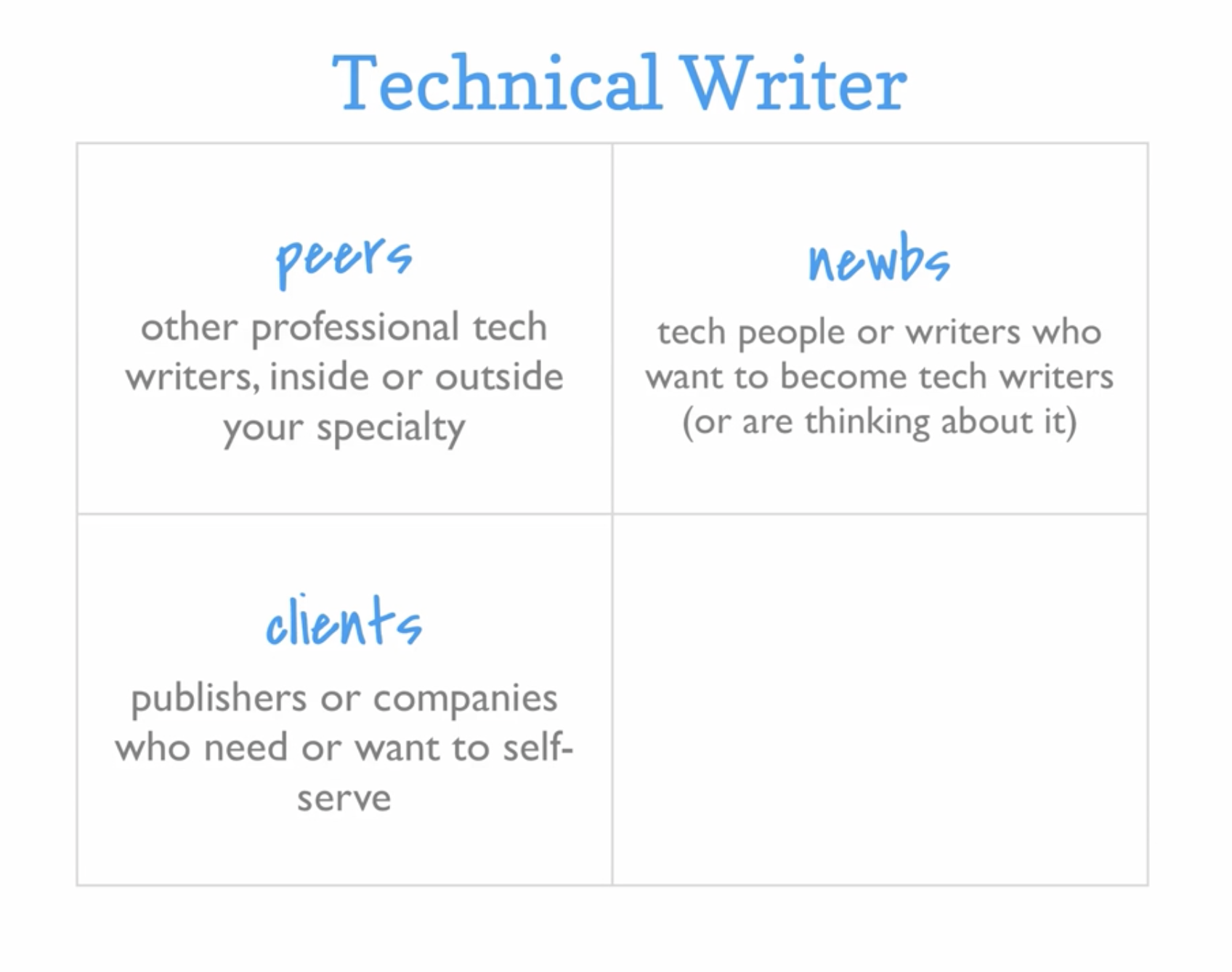
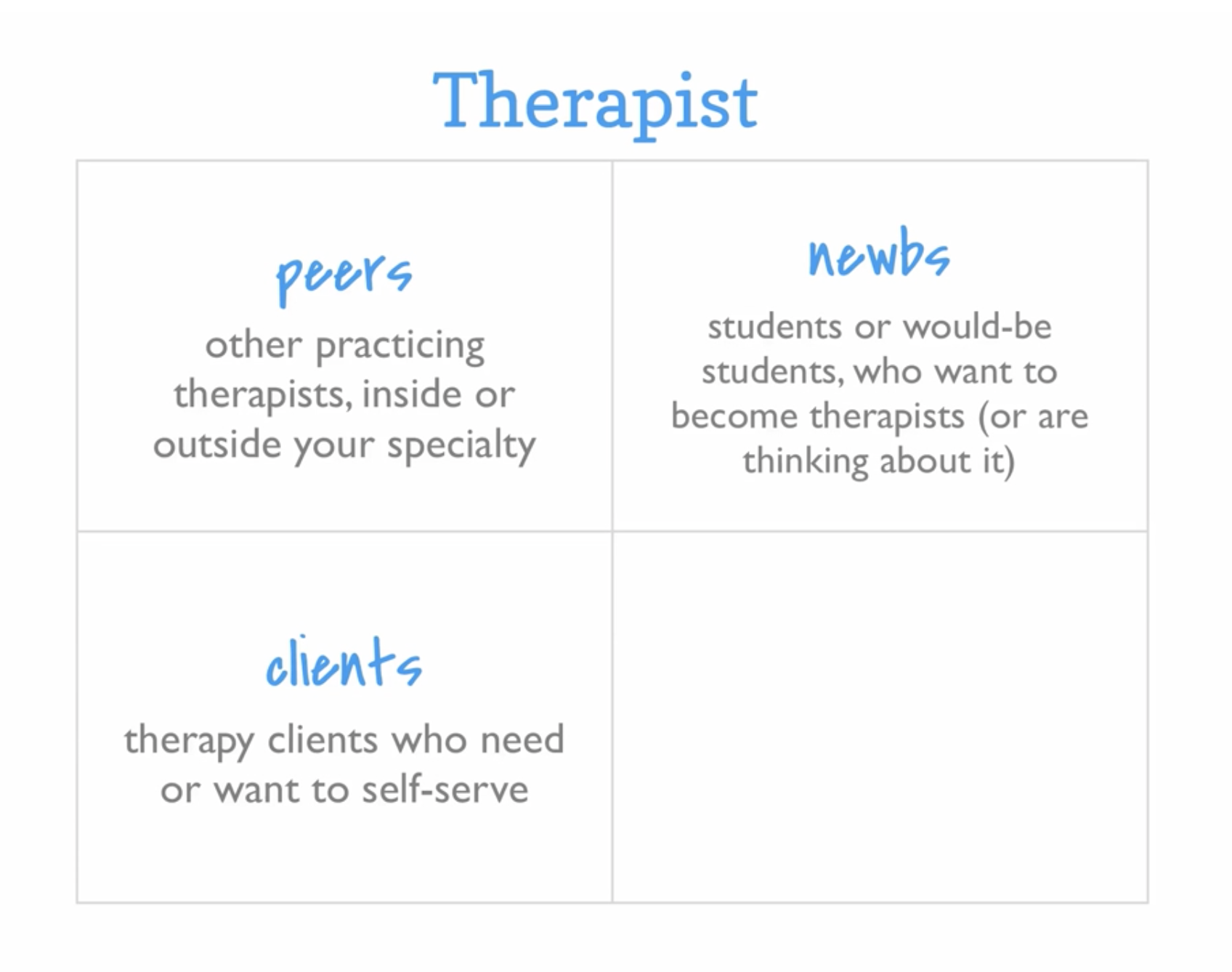
- peers (people who are what you are)
- “Can you show me how to do that one thing you do?” If you can ever answer this question while working, you can serve your peers.
- people who aspire to be what you are
- more work because you have to bootstrap them into basic skills
- people who hire what you are
- products that replace your service
- makes for an easier transition from serving clients to making products
- can segue into client relationships (get leads)
- peers (people who are what you are)
- can serve
- Audience must hang out online together
- “Expert” just means there is someone behind you and someone ahead of you. Not an absolute position.
Case Studies
Technical Writer
Therapist
Action: Name my audience
Web developers (aspiring)
Concerns
- They are professional, but only after they’ve made the transition I’m trying to take them through (aspiring dev to working dev)
- They do spend a lot of money to make the transition though. Coding bootcamps are a huge moneymaker ($12-16k) and on-demand learn to code courses are popular and sometimes pricey.
- After they’ve spent money on a bootcamp, they don’t have much left for anything else, even though the bootcamps often do a poor job helping them transition into careers.